

How to Stop Surprise Charges on Your VoIP Bill
You approved a phone system. You agreed to a monthly rate. Then the invoice arrived and it was $200 more than you expected. If that sounds familiar, you are not alone. Surprise business phone charges are one of the most common complaints Florida business owners bring to us. This guide breaks down exactly where those charges come from, what a clean VoIP invoice should look like, and how to stop the billing surprises before they hit your account again.
Where Surprise Charges Hide on a Business Phone Bill
Pull up your last phone invoice. If you see more than five line items you cannot immediately explain, that is a problem. Here are the most common places surprise business phone charges appear on Florida business VoIP and legacy carrier bills.
Per-Feature Add-On Fees
Many national VoIP providers advertise a base rate and then charge separately for auto-attendants, call queues, voicemail-to-email, call recording, and even hold music. These features are often presented as included during the sales call, then billed as add-ons starting month two. Check your contract for the word “included” versus “available” — they are not the same thing.
Regulatory Recovery Fees and Surcharges
Carriers are allowed to pass certain government fees to customers, but some providers inflate these or add their own administrative recovery fees on top. The FCC publishes guidance on what legitimate universal service contributions look like. If your invoice shows a “regulatory recovery fee” that is a round number like $9.99 per line, ask your provider to itemize exactly what it covers.
Overage Charges on “Unlimited” Plans
Unlimited plans often have fair-use thresholds buried in the terms of service. Exceed them and you get per-minute charges. For Florida businesses with high call volume — think busy season for a tourism operator in Orlando or a multi-location retail chain in Tampa — these overages can add up fast.
Early Termination Fees
If you signed a one- or two-year contract and your needs changed, the exit cost can be significant. This is one reason month-to-month service matters: you are not paying a penalty to leave a provider that is not delivering.
Hardware and Activation Fees
Some providers charge a per-device activation fee on top of hardware costs. Others bundle a “provisioning fee” that was never mentioned in the quote. Ask for a complete cost breakdown before signing anything.
VoIP Provider Comparison: Billing Transparency
Not all VoIP providers bill the same way. The table below compares common billing practices across provider types so you can evaluate your current situation or a new quote with clear eyes.
| Provider Type | Typical Pricing Model | Common Hidden Fees | Contract Required | Local Support | Install Timeline |
|---|---|---|---|---|---|
| Mynians VoIP (Florida) | Per-licensed-user flat rate from $22.95 per licensed user/mo | None published; features included by tier | No — month-to-month | Yes — Orlando-based team | 72 hours when site is ready |
| RingCentral | Per-user tiered pricing | Add-on fees for some features, SMS overages | Annual discounts push toward contracts | National call center | Self-provisioned or scheduled |
| Nextiva | Per-user tiered pricing | Setup fees, some features tier-locked | Annual common | National call center | Varies by market |
| AT&T Business | Bundle pricing, legacy line charges | Regulatory surcharges, equipment fees | Often required | Regional, not local | Weeks to months |
| Legacy PBX / Landline | Per-line plus maintenance contracts | Hardware maintenance, per-call charges | Maintenance contracts common | Depends on vendor | Weeks for changes |
| DIY Softphone Apps | Low monthly per-user | No SLA, porting complications, no support | No | None | Immediate but unsupported |
What a Clean VoIP Invoice Should Look Like
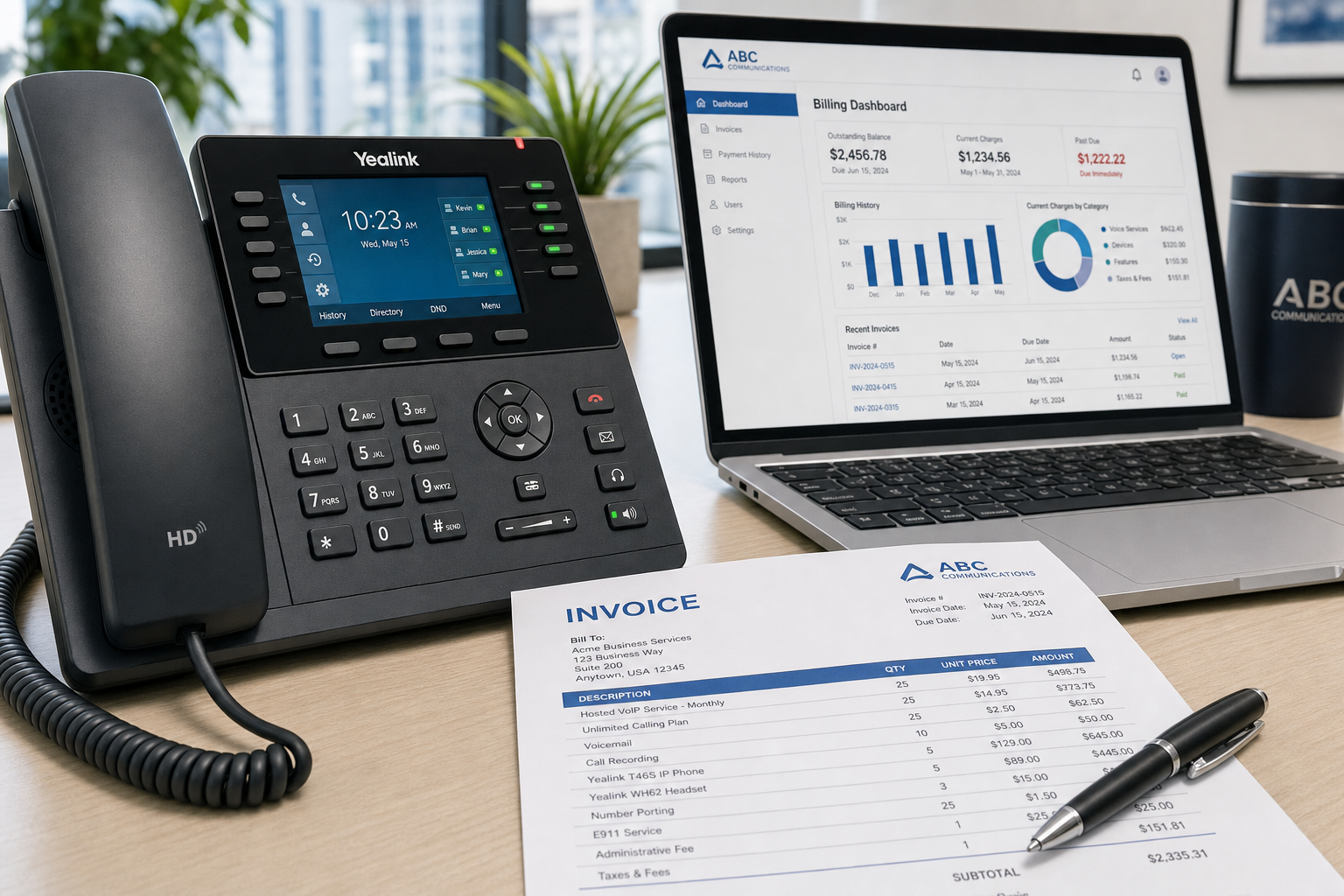
A clean business VoIP invoice is short, specific, and matches your original quote exactly. Here is what you should expect to see — and nothing more.
Line-Item Clarity
Each line on your invoice should correspond to something you agreed to: a number of lines at a stated rate, any optional add-ons you specifically requested, applicable taxes, and any legitimate regulatory pass-throughs that were disclosed in writing before you signed. If a line item does not match something in your original quote, ask for a written explanation before paying.
Features Listed, Not Billed Separately
On a well-structured VoIP plan, features like auto-attendant, call routing, voicemail to email, and softphone access are included in the tier rate — not billed as individual line items. If your invoice shows a separate charge for each of these, your provider is unbundling features that most modern VoIP systems include by default.
No Surprise Minimums Mid-Contract
Some providers quietly introduce minimum usage requirements or minimum line counts after the first billing cycle. Your invoice should never show a charge for lines you did not order or usage you did not generate.
Understanding Per-Line Pricing
Per-licensed-user pricing is the most straightforward billing model for business VoIP. You pay a fixed monthly rate for each licensed user, and that rate includes a defined set of features. There are no per-minute charges for standard domestic calls, no per-feature fees for the capabilities in your tier, and no guessing about what next month’s bill will look like.
Mynians VoIP publishes three tiers. The Essential plan starts at $22.95 per licensed user per month with a five-user minimum. The Professional plan is $29.95 per licensed user per month, also with a five-user minimum. Enterprise pricing starts at $39.95 per licensed user per month with a ten-user minimum. Each tier includes a defined feature set — you can review the full breakdown on the VoIP pricing page before committing to anything.
The five-user minimum on Essential and Professional plans reflects the infrastructure overhead of a properly configured business phone system. A single-line softphone app is a different product. If your business has fewer than five licensed users, that is worth discussing on a consultation call so you get the right fit.
Number Porting and Installation: Where Costs Sneak In
Number Porting Done Wrong Costs You Twice
Porting your existing business phone numbers to a new provider is one of the most anxiety-inducing parts of switching. Done wrong, it means days of missed calls, duplicate billing from two carriers at once, and porting rejection fees. Done right, it is invisible to your customers — your numbers move, your calls keep coming in, and you get one final bill from the old carrier.
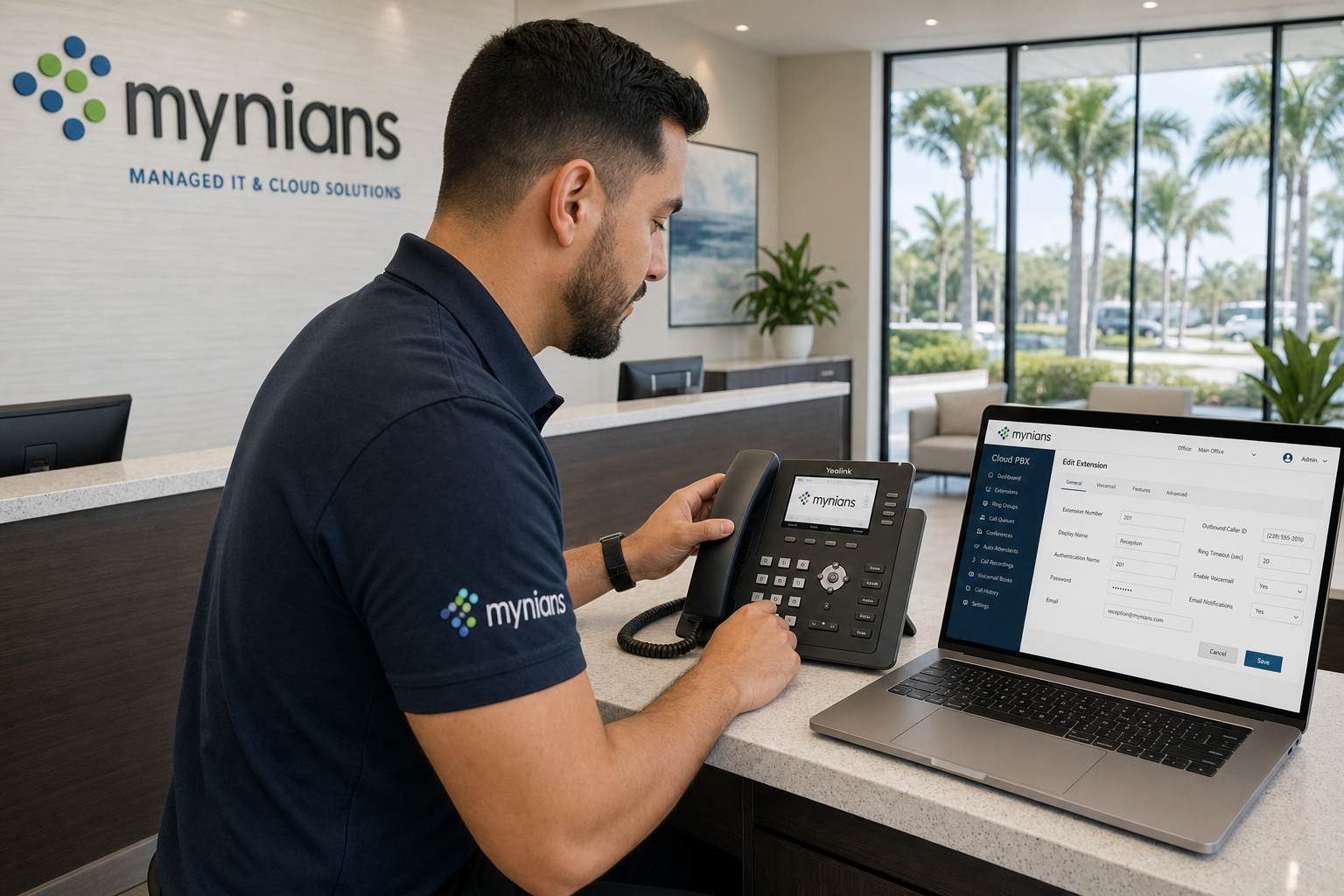
Mynians handles number porting end-to-end. That means we manage the paperwork, coordinate with your current carrier, and confirm the port before we cut anything over. You do not need to navigate the FCC porting rules yourself or chase your old carrier for a release. This is included — not billed as a separate porting fee.
Installation Timelines and What Affects Them
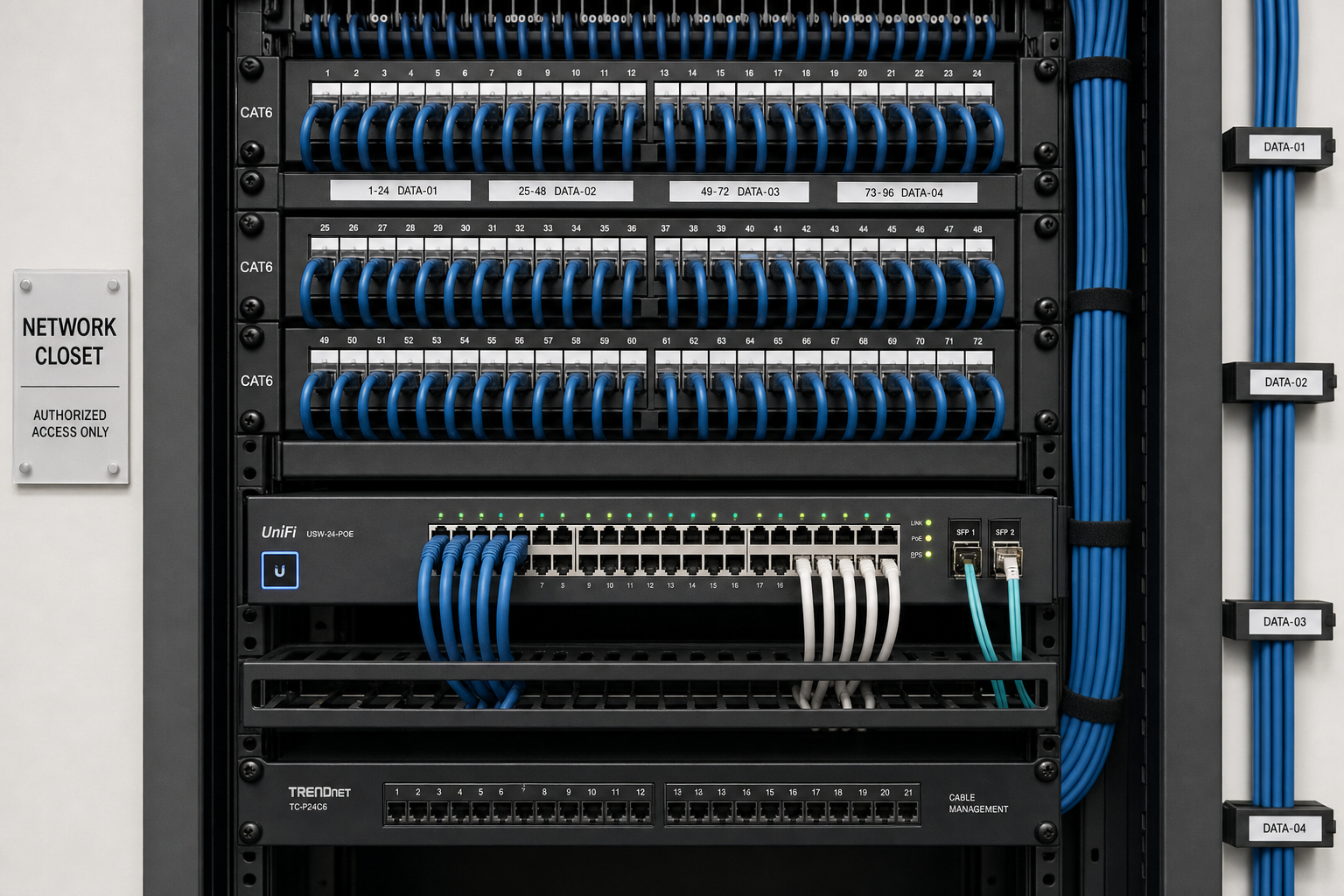
National providers routinely quote four to six weeks for a business phone system install in Florida markets. That timeline is driven by scheduling backlogs, remote provisioning queues, and the fact that no one local is managing your project. Mynians targets a 72-hour install across major Florida markets — Orlando, Winter Garden, Tampa, Miami, and Jacksonville — when the site is ready. “Site ready” means your network infrastructure, cabling, and internet connection are confirmed before the install date. If your cabling is not in order, that is something Mynians can also handle, since the same team covers structured cabling and network readiness.
What Installation Should and Should Not Cost
Ask any provider you are evaluating to give you a written implementation cost before you sign. Legitimate implementation costs cover on-site configuration, device provisioning, and system testing. They should not include charges for features that were described as included, or fees for porting that was promised at no cost. Get the full picture in writing, then confirm the numbers on a consultation call.
Who This Is For and Who It Is Not
This Is For You If:
- You are a Florida business owner or office manager who has received a phone bill that did not match what you were quoted.
- You are evaluating a switch from a legacy landline, a national VoIP provider, or an AT&T business bundle.
- You manage multiple locations in Florida and need consistent call routing, auto-attendants, and a single point of contact for support.
- You are in a regulated industry like healthcare and need HIPAA-compliant call flows handled correctly from day one.
- You want month-to-month service with no long-term contract risk.
This Is NOT For You If:
- You need a single personal phone line with no business call routing requirements.
- You are looking for a free or near-free softphone app with no SLA or local support.
- Your business has fewer than five lines and you are not open to discussing whether a structured plan fits your needs.
- You are outside Florida and need on-site support in a market Mynians does not currently serve.
How to Audit Your Current Phone Bill
You do not need an accountant to audit a phone bill. You need your original quote, your last three invoices, and about thirty minutes.
- Pull your original signed quote or order confirmation. Every charge on your invoice should trace back to a line in that document.
- List every line item on your most recent invoice. Write down the description and the dollar amount for each one.
- Match each invoice line to your quote. If a line item does not appear in your quote, circle it and flag it for your provider.
- Check for feature charges. If you are being billed separately for auto-attendant, voicemail, or call queues, ask whether those were supposed to be included in your base rate.
- Look at regulatory surcharges. The FTC has published guidance on what carriers can and cannot charge as pass-through fees. If a surcharge looks inflated or was not disclosed, request a written breakdown.
- Compare three months of invoices. Charges that appear in month two or three but not month one are a red flag — they may indicate add-ons that were quietly activated after your initial billing cycle.
- Call your provider and ask for a line-by-line explanation. A provider with nothing to hide will walk you through every charge. A provider that deflects or cannot explain a line item is telling you something important.
If the audit reveals charges you cannot reconcile, or if your provider cannot explain them clearly, that is a strong signal it is time to get a second opinion. Mynians offers a free bill review as part of the initial consultation — bring your invoice and we will go through it with you.
Frequently Asked Questions
What are the most common surprise charges on a business VoIP bill?
The most common surprise charges include per-feature add-on fees for auto-attendants, call queues, and voicemail-to-email that were described as included during the sales process; inflated regulatory recovery surcharges; overage fees on plans marketed as unlimited; and activation or provisioning fees that were not disclosed in the original quote. Reviewing your invoice against your signed quote line by line is the fastest way to identify charges that do not belong.
What does per-licensed-user VoIP pricing mean for my business?
Per-licensed-user pricing means you pay a fixed monthly rate for each licensed user, and that rate includes a defined set of features. There are no per-minute charges for standard domestic calls and no separate fees for features included in your tier. Mynians VoIP offers per-licensed-user pricing starting at $22.95 per licensed user per month on the Essential plan with a five-user minimum, $29.95 per licensed user per month on Professional with a five-user minimum, and Enterprise starting at $39.95 per licensed user per month with a ten-user minimum.
How long does a business VoIP installation take in Florida?
Mynians VoIP targets a 72-hour installation timeline across major Florida markets including Orlando, Winter Garden, Tampa, Miami, and Jacksonville when the site is ready. Site readiness means your network infrastructure, cabling, and internet connection are confirmed before the install date. National providers often quote four to six weeks for the same work due to scheduling backlogs and remote provisioning queues.
Will I be charged for number porting when I switch VoIP providers?
Mynians handles number porting end-to-end and includes it as part of the service — it is not billed as a separate porting fee. We manage the paperwork, coordinate with your current carrier, and confirm the port before cutting anything over. Some national providers charge porting fees or leave the process to the customer, which can result in missed calls, duplicate billing, and porting rejections.
Is there a contract required for Mynians VoIP service?
No. Mynians VoIP operates on a month-to-month basis with no long-term contracts required. This means you are not locked in if the service does not meet your expectations or if your business needs change. Many national VoIP providers push annual contracts to offer discounted rates, which creates early termination fee exposure if you need to leave.
What happens during a free VoIP consultation with Mynians?
During the free consultation, a member of the Mynians VoIP team reviews your current phone bill line by line, discusses your call volume and routing needs, and provides a line-by-line quote based on your actual business requirements. There is no obligation to purchase. You can schedule a consultation at voip.mynians.com/schedule-consultation/ or call (407) 374-2782.
Update Log
- September 2026: Created and reviewed for Mynians VoIP business phone system accuracy.