

How to Stop Surprise Charges on a VoIP Bill
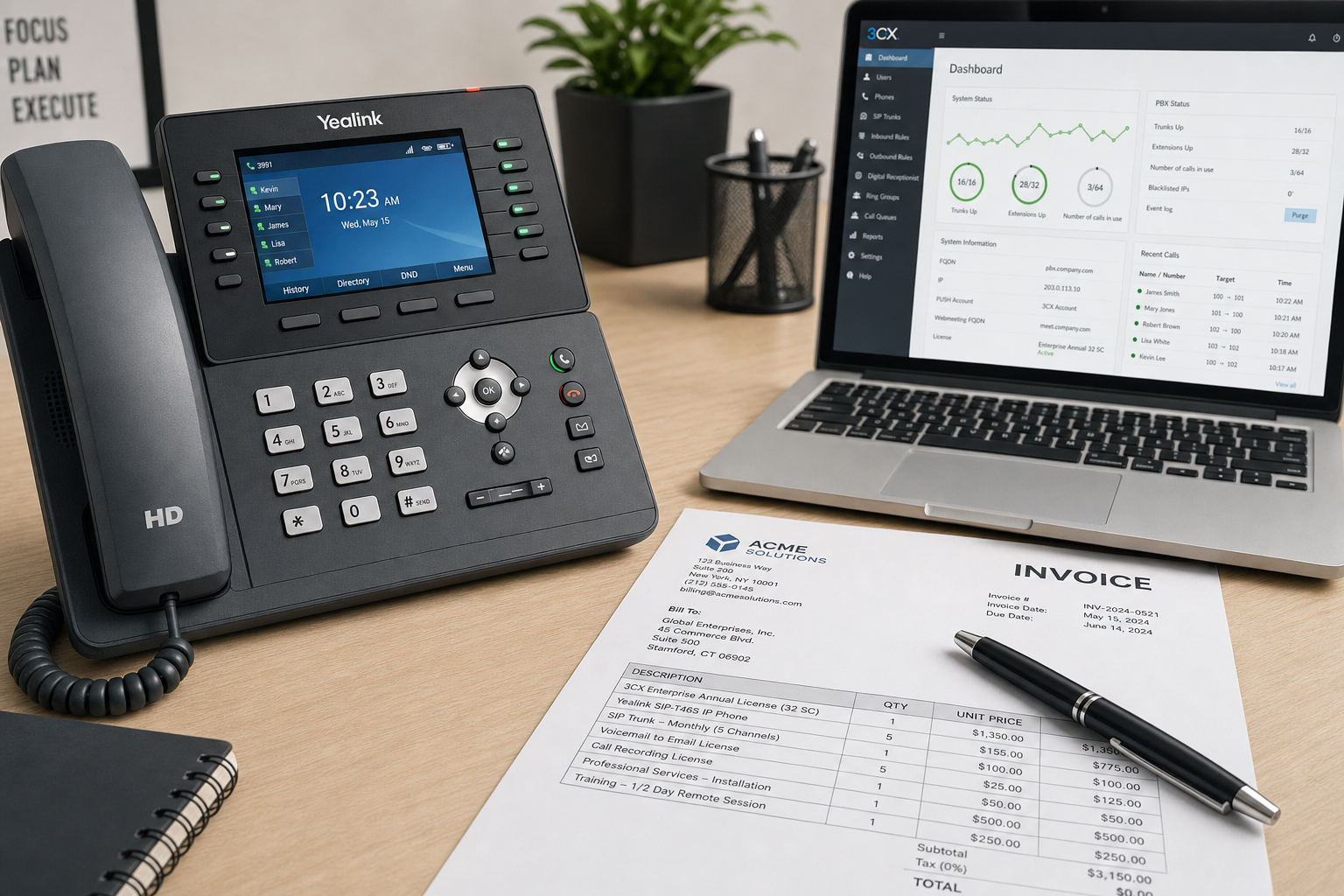
You approved a VoIP quote, signed up, and then the first real invoice arrived looking nothing like what you expected. Extra lines, vague fees, a “regulatory recovery” surcharge, and a toll-free number charge you never asked for. If that sounds familiar, you are not alone. Surprise business phone bill charges are one of the most common complaints Florida small business owners raise when switching phone providers — or when they finally sit down and actually read their current bill. This guide walks you through every category of charge that tends to appear without warning, shows you how to audit your own invoice, and explains what a transparent Florida business VoIP quote should look like before you sign anything.
Why VoIP Bills Surprise Florida Business Owners
The VoIP industry has a billing transparency problem. National carriers and large hosted-phone platforms compete aggressively on headline price, which means the number you see in an ad or on a landing page is almost never the number that appears on your invoice. The gap between the advertised rate and the actual monthly cost is where surprise business phone bill charges live.
Florida businesses face a few additional wrinkles. State and local taxes on telecommunications services vary by county. Businesses in Orange County, Hillsborough County, Miami-Dade, and Duval County may see different tax line items on the same national carrier plan. Add in federal Universal Service Fund contributions, E911 fees, and carrier-imposed “regulatory recovery” surcharges — none of which are technically taxes but all of which show up on your bill — and a quoted $25-per-line plan can land closer to $38 or $40 per line by the time the invoice arrives.
The other common trigger is the difference between a per-line model and a per-licensed-user model. Some providers charge per physical phone line or DID (direct inward dial number). Others charge per licensed user — meaning each person who needs phone access. If your provider quotes per line and you have a receptionist who needs three lines ringing simultaneously, you may be billed for three lines instead of one user. That distinction alone can double a small office’s monthly bill.
Provider Comparison: Pricing Transparency at a Glance
Before auditing your current bill, it helps to understand how different provider types handle pricing disclosure. The table below compares common options a Florida small business might evaluate.
| Provider Type | Pricing Model | Contract Terms | Add-On Transparency | Local Florida Support |
|---|---|---|---|---|
| Mynians VoIP | Per licensed user/month; published rates from $22.95 | Month-to-month; 30-day cancellation notice | Itemized written quote; taxes, fees, and hardware quoted separately | Yes — Orlando-area local team |
| RingCentral | Per user/month; advertised rates often require annual commitment | Annual contracts common; month-to-month available at higher rate | Add-ons and taxes not always shown until checkout | No local presence; national support queue |
| Nextiva | Per user/month; tiered plans | Annual contracts standard; early termination fees apply | Regulatory fees and taxes added at billing | No local presence; national support |
| AT&T Business | Per line; bundled plans | 1–3 year contracts common; significant ETF | Complex bill with multiple fee categories | Regional offices but not local VoIP specialists |
| Legacy PBX / Landline | Per line plus hardware maintenance | Varies; hardware depreciation adds hidden cost | Maintenance and upgrade costs often unplanned | Depends on local vendor |
| DIY Softphone Apps | Low per-user cost | Usually month-to-month | Low base cost but no support; hidden IT labor cost | No support; self-managed |
The table above is a general market overview based on publicly available information. Always request a written quote from any provider before committing.
Common Add-Ons and Line Items to Audit
Pull out your most recent VoIP invoice and look for each of the following categories. Any one of them can add $5 to $20 per user per month without ever being discussed during the sales call.
1. Toll-Free Number Fees
Many providers include a local DID number in the base plan but charge separately for toll-free numbers — both a monthly rental fee and a per-minute usage fee. If your business was given a toll-free number during setup and you did not specifically request one, check whether it is generating usage charges.
2. International Calling Bundles
Some platforms automatically add an international calling bundle at signup. If your business does not make international calls, this is a line item you can likely remove. If you do make international calls, confirm whether the bundle rate is actually cheaper than pay-as-you-go for your actual call volume.
3. Call Recording Storage
Call recording is a legitimate business tool, but cloud storage for recordings is often billed separately — and storage fees can grow month over month as recordings accumulate. Confirm whether your plan includes recording storage, how long recordings are retained, and what the overage cost is.
4. Advanced Auto-Attendant or IVR Tiers
Basic auto-attendant is included in most hosted VoIP plans. Multi-level IVR, custom call flows, or advanced queue management are sometimes gated behind a higher tier or charged as a separate add-on. If your provider upgraded your call flow configuration and did not tell you it would change your billing tier, that is a common source of surprise charges.
5. Regulatory Recovery and Carrier Fees
These are not government taxes. They are fees that carriers impose to recover their own compliance costs, and they are legal — but they are also not always disclosed clearly at the time of sale. The FCC requires that certain fees be disclosed, but the specific line-item labels vary widely by provider. Look for terms like “regulatory recovery fee,” “network access fee,” “administrative fee,” or “carrier cost recovery” on your invoice.
6. E911 Service Fees
E911 fees are legitimate and required, but the amount varies. Some providers charge per user, some per location, and some per DID number. If you have multiple locations or multiple DIDs, this fee can multiply quickly.
7. Hardware and Headset Rentals
If your provider supplied desk phones or headsets and you did not purchase them outright, you may be paying a monthly rental fee that was not clearly separated from the service cost in the original quote. Check your invoice for any equipment line items.
8. Implementation and Onboarding Fees Billed After Go-Live
Some national providers quote a low monthly rate and then invoice implementation, porting, or onboarding fees after the system is already live — when you have less leverage to negotiate. A transparent provider quotes implementation costs upfront. At Mynians VoIP, standard implementation is $149 for 5–9 licensed users and is included for 10 or more licensed users, stated in writing before the project starts.
Renewal Traps and Contract Clauses to Watch
Even if your initial invoice is clean, auto-renewal clauses can lock you into a higher rate or a longer term without any active decision on your part.
Auto-Renewal at a Higher Rate
Many annual VoIP contracts include a clause that automatically renews at the then-current list price — which may be higher than your original promotional rate. If you signed up during a promotional period and did not set a calendar reminder to review the contract before the renewal date, you may have already renewed at a higher rate.
Early Termination Fees
Annual and multi-year contracts typically include early termination fees (ETFs) calculated as a percentage of the remaining contract value. On a 3-year contract for a 20-user office, an ETF can run into thousands of dollars. Month-to-month service eliminates this risk entirely. Mynians VoIP operates on a month-to-month basis with a 30-day cancellation notice — no multi-year lock-in.
Tier Creep
Some platforms automatically move accounts to a higher service tier when usage crosses a threshold — more users added, more storage consumed, more call minutes used. The upgrade happens automatically; the downgrade back to the original tier requires a support call and sometimes a billing adjustment request. Review your plan tier every quarter to confirm you are still on the tier you selected.
Porting Fees at Cancellation
Number porting — moving your existing business phone numbers to a new provider — is your legal right under FCC number portability rules. However, some providers charge a per-number porting fee when you leave. Confirm this cost before you sign up, not after you decide to leave. Mynians VoIP handles number porting end-to-end, and porting timelines are confirmed per site after reviewing network readiness, hardware, and porting requirements.
Your Florida VoIP Bill Audit Checklist
Print this checklist or share it with your office manager. Work through it with your most recent invoice in hand.
Step 1 — Confirm Your Billing Model
- Are you billed per licensed user or per phone line?
- Does the number of users on your invoice match the number of people actively using the system?
- Are there inactive users still being billed?
Step 2 — Identify Every Fee Category
- List every line item on the invoice and categorize it: base plan, add-on, tax, regulatory fee, hardware, or other.
- Flag any line item you did not explicitly request or approve.
- Calculate your true per-user monthly cost including all fees and taxes.
Step 3 — Check Your Add-Ons
- Are you paying for toll-free numbers you do not use?
- Is call recording storage accumulating charges?
- Is an international calling bundle active on an account that does not make international calls?
- Are you on a higher IVR or call-flow tier than you need?
Step 4 — Review Your Contract Terms
- What is your contract end date?
- Does the contract auto-renew? If so, what is the notice period to cancel or renegotiate?
- What is the early termination fee if you leave before the contract ends?
- What does porting your numbers out cost?
Step 5 — Compare Against Published Pricing
- Does your provider publish its pricing publicly, or do you have to call to get a quote?
- Is the rate you are paying consistent with what the provider currently advertises?
- Have you been moved to a higher tier without a clear notification?

What a Transparent Florida VoIP Quote Should Include
A clean VoIP quote for a Florida small business should show every cost before you sign — not after the system is live. Here is what to look for.
Per-Licensed-User Monthly Rate
The base rate should be stated per licensed user per month, with the minimum user count clearly noted. Mynians VoIP publishes its VoIP pricing directly: Essential at $22.95 per licensed user per month with a 5-user minimum, Professional at $29.95 per licensed user per month with a 5-user minimum, and Enterprise starting at $39.95 per licensed user per month with a 10-user minimum and a final quote required.
Implementation Cost
Implementation should be quoted in writing before the project starts. For Mynians VoIP, standard implementation is $149 for 5–9 licensed users and is included for 10 or more licensed users. Installation timelines are confirmed per site after reviewing network readiness, hardware, and porting requirements — because every Florida office is different.
Hardware Costs
If you need desk phones, conference room units, or headsets, those costs should appear on the quote as separate line items — not discovered on the first invoice.
Taxes and Regulatory Fees
A good-faith estimate of applicable taxes and regulatory fees should be included in the quote, even if the exact amount varies slightly by county. Florida businesses in Orlando, Tampa, Miami, and Jacksonville may see different local tax rates, and a provider who knows the Florida market should be able to give you a realistic estimate.
Add-Ons You Actually Requested
Any add-on — toll-free numbers, call recording, additional DIDs, advanced call flows — should be listed as a separate line item with its monthly cost stated explicitly. Nothing should be activated by default without your knowledge.
Contract and Cancellation Terms
The quote or accompanying service agreement should state clearly whether service is month-to-month or annual, what the cancellation notice period is, and whether there is an early termination fee. Month-to-month service with a 30-day cancellation notice is the cleanest arrangement for a small business that wants flexibility.
Who This Is For — and Who It Is Not
This guide is for you if:
- You are a Florida small business owner or office manager who received a VoIP invoice that was higher than expected.
- You are evaluating a new VoIP provider and want to know what questions to ask before signing.
- You are currently on a national carrier plan and suspect you are paying for features or lines you do not use.
- You manage multiple Florida locations and need consistent, predictable per-user billing across sites.
- You are approaching a contract renewal date and want to audit your current costs before auto-renewal locks you in.
This guide is NOT for you if:
- You are a solo operator with a single line and no staff — a basic consumer VoIP app may be sufficient for your needs.
- You are a large enterprise with a dedicated telecom procurement team and existing carrier contracts — your needs require a different scope of evaluation.
- You are looking for a free or near-free phone solution with no support — DIY softphone apps exist, but they come with no local support and no accountability when something breaks.
Frequently Asked Questions
What is the difference between per-line and per-licensed-user VoIP pricing?
Per-line pricing charges you for each active phone line or DID number on your account. Per-licensed-user pricing charges you for each person who needs access to the phone system. If a receptionist needs multiple lines ringing simultaneously, per-line pricing can multiply your cost quickly. Per-licensed-user pricing is generally more predictable for small businesses because you pay based on headcount, not on how many simultaneous calls a single person can receive. Mynians VoIP uses per-licensed-user pricing.
Are regulatory recovery fees on a VoIP bill legal?
Yes. Regulatory recovery fees are legal charges that carriers use to recover their own compliance and infrastructure costs. They are not government taxes, but they are permitted. The FCC requires disclosure of certain fees, but the specific labels and amounts vary by provider. The best protection is to ask your provider for a fully loaded quote that includes an estimate of all fees and taxes before you sign up, so there are no surprises on the first invoice.
Can I keep my existing Florida business phone numbers when switching VoIP providers?
Yes. Number portability is your legal right under FCC rules. You can move your existing business phone numbers to a new VoIP provider. The porting process requires submitting a port request with your current account information, and timelines vary depending on your current carrier and the complexity of the port. Mynians VoIP handles number porting end-to-end, and the timeline is confirmed per site after reviewing network readiness, hardware, and porting requirements.
What does Mynians VoIP charge for implementation?
Standard implementation at Mynians VoIP is $149 for accounts with 5 to 9 licensed users. For accounts with 10 or more licensed users, implementation is included. Hardware, taxes, fees, and any quoted add-ons are separate. Installation timelines are confirmed per site after reviewing network readiness, hardware, and porting requirements, because every Florida office environment is different.
Does Mynians VoIP require a long-term contract?
No. Mynians VoIP operates on a month-to-month basis with a 30-day cancellation notice. There are no multi-year lock-in contracts and no early termination fees structured into the service agreement. This gives Florida businesses the flexibility to scale up, scale down, or change direction without a financial penalty.
What should a transparent VoIP quote include?
A transparent VoIP quote should include the per-licensed-user monthly rate with the minimum user count, the implementation cost, hardware costs if applicable, a good-faith estimate of taxes and regulatory fees, any add-ons you requested listed as separate line items, and the contract and cancellation terms. Nothing should be activated by default without your knowledge, and no costs should appear for the first time on your invoice after the system is already live.
Update Log
- October 2026: Created and reviewed for Mynians VoIP business phone system accuracy.