
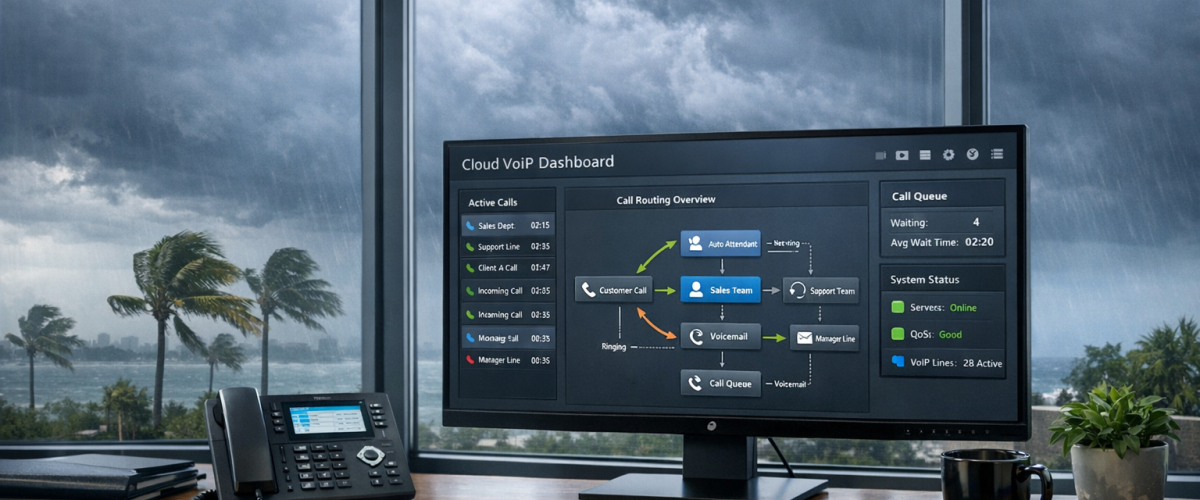
Storm-Ready VoIP Failover Systems for Florida Businesses
A VoIP failover phone system is one of the most practical investments a Florida business can make before hurricane season begins. When storms knock out power lines and damage physical infrastructure, cloud-based phone systems can reroute calls automatically, keeping your team reachable and your customers informed. This guide covers everything you need to know to build a reliable storm-ready communication plan.
A VoIP failover phone system automatically redirects incoming calls to backup numbers, mobile devices, or remote agents when your primary office connection fails. For Florida businesses, this means calls continue flowing during power outages, internet disruptions, or mandatory evacuations without requiring manual intervention from staff.
Last Updated: September 2026
- Understanding VoIP Failover Systems
- Importance of Business Continuity in Florida
- Setting Up a VoIP Failover System
- Best VoIP Providers for Hurricane Season
- Features to Look for in a VoIP System
- Common Mistakes Florida Businesses Make
- Practical Steps to Prepare Before Storm Season
- Frequently Asked Questions
Understanding VoIP Failover Systems
VoIP failover is the process of automatically switching phone traffic to an alternate path when the primary connection becomes unavailable. Unlike traditional landlines that depend on physical copper infrastructure, a cloud-hosted VoIP system stores call routing rules on remote servers. When your office loses power or internet, those rules remain active and redirect calls without any action required on your end.
Modern failover configurations typically include geographic redundancy, meaning your provider hosts data across multiple data centers in different regions. If one data center is affected by a storm, another takes over seamlessly. Google Cloud’s disaster recovery documentation outlines how geographic redundancy works in practice and why it matters for uptime-dependent services.
Importance of Business Continuity in Florida
Florida businesses face a uniquely high risk from Atlantic hurricanes, tropical storms, and severe flooding. The Atlantic hurricane season runs from June through November, and the state has experienced some of the most damaging storms in recorded history. For businesses in coastal counties, a single storm can mean days or weeks of disrupted operations.
Business continuity planning in Florida must account for scenarios where staff cannot physically reach the office, where local internet infrastructure is damaged, and where customers are actively trying to reach you for urgent information. A hurricane phone system that fails during these moments can result in lost revenue, damaged client relationships, and compliance issues for regulated industries.
The FCC’s guide on staying connected during disasters recommends that businesses maintain redundant communication paths and test them before emergencies occur.
Setting Up a VoIP Failover System
Setting up a VoIP failover system involves three core components: a cloud-hosted PBX, defined failover routing rules, and a tested backup internet or cellular connection. Most business VoIP providers offer failover configuration through an online dashboard, allowing administrators to set priority order for call routing without needing technical expertise.
Key configuration steps include defining which numbers receive calls first, setting mobile numbers as secondary destinations, enabling voicemail-to-email so messages reach staff even without office access, and scheduling regular failover tests before storm season begins each June.
Best VoIP Providers for Hurricane Season
When evaluating a hurricane phone system, prioritize providers that document their outage and failover plan, host the platform outside your building, and support mobile apps so staff can work from any location. Providers such as RingCentral, Nextiva, and Vonage Business all offer cloud-hosted systems with configurable failover routing.
Prices verified March 2026. Pricing may vary by promotions, billing cycle, and add-on features.
Entry-level business VoIP plans typically start between $20 and $35 per user per month. Plans with advanced failover features, call analytics, and dedicated support tiers generally range from $40 to $65 per user per month. Review each provider’s service level agreement carefully to confirm what remedies, if any, apply during declared natural disasters.
For technical standards on network reliability, the NIST Communications Technology Laboratory publishes research on resilient communication infrastructure that can inform your provider evaluation.
Features to Look for in a VoIP System
Not all VoIP systems are equally prepared for storm conditions. When evaluating options for business continuity in Florida, look for the following capabilities:
- Automatic failover routing that activates without manual steps
- Mobile softphone apps that work over cellular data when office internet fails
- Voicemail-to-email delivery so messages reach staff regardless of location
- Call queue continuity that preserves hold positions during brief outages
- Geographic number portability so your business number stays active from any location
- Admin dashboard access from any device to adjust routing rules in real time
E-E-A-T signals matter here too. Providers that publish transparent uptime histories, offer documented SLAs, and have verifiable customer support channels are more trustworthy partners for storm-ready communication than those with vague reliability claims.
Common Mistakes Florida Businesses Make
Many businesses invest in VoIP systems but fail to configure them for actual storm scenarios. Common mistakes include:
- Never testing failover routing before an emergency occurs
- Relying on a single internet provider without a cellular backup connection
- Failing to update mobile numbers in the failover configuration after staff changes
- Ignoring voicemail-to-email setup, leaving messages inaccessible during evacuations
- Choosing providers without geographic redundancy, meaning the provider’s own servers may be affected by the same storm
- Skipping compliance review for regulated industries such as healthcare or financial services, where communication continuity has legal requirements
Reviewing your configuration with your provider at least 60 days before June 1 each year reduces the risk of discovering gaps during an active storm event.
Practical Steps to Prepare Before Storm Season
- Audit your current phone system and identify single points of failure.
- Select a cloud VoIP provider that documents its outage and failover plan.
- Configure primary and secondary failover routing rules in your admin dashboard.
- Set up voicemail-to-email for all extensions.
- Install the provider’s mobile app on all key staff devices and confirm login credentials.
- Arrange a secondary internet connection such as a 4G or 5G cellular router for your office.
- Conduct a live failover test by simulating an outage and confirming calls route correctly.
- Document your failover configuration and store it in a cloud location accessible from any device.
- Schedule an annual review each April before hurricane season begins.
For additional guidance on building resilient business communication systems, Google Search Central’s helpful content guidance reinforces the value of practical, experience-based information when evaluating service providers online.
Download the keyword clustering template
Frequently Asked Questions
What is a VoIP failover phone system?
A VoIP failover phone system automatically reroutes calls to backup destinations such as mobile phones or remote agents when the primary office connection fails. It requires no manual action during an outage.
How quickly does VoIP failover activate during a storm?
Most cloud VoIP systems detect connection loss within seconds and activate failover routing automatically. The switchover is typically transparent to callers.
Do I need special hardware for VoIP failover?
No dedicated hardware is required. Failover routing is managed through your provider’s cloud dashboard. A cellular backup router for your office internet connection is recommended but not mandatory.
Which Florida industries benefit most from VoIP failover?
Property management, healthcare, legal services, insurance, and retail businesses that depend on inbound calls for revenue or compliance benefit most from storm-ready VoIP systems.